
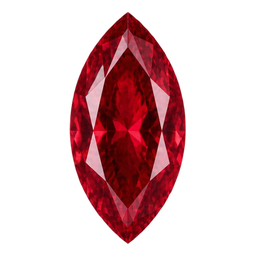
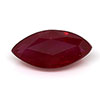
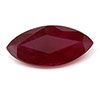
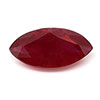
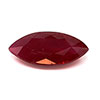
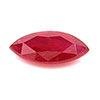
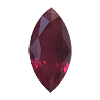
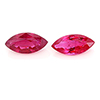
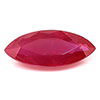
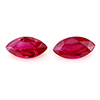
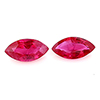
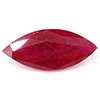
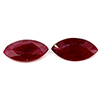
About Our Rubies
Ruby is the red variety of corundum. Compare color, transparency, inclusions, cut and measurements alongside weight. Use the product's documented origin rather than assuming that every ruby comes from Burma (Myanmar).
Frequently Asked Questions
What should I look for when choosing loose rubies?
Compare color first, then clarity, cut, carat weight and face-up dimensions. Review the disclosed treatment and available report information for the particular stone.
What does natural ruby mean?
A natural ruby formed in the earth rather than in a laboratory. Natural rubies can be treated, so natural and untreated are separate descriptions.
Why is color important in rubies?
Hue, saturation and tone strongly affect value. A vivid red to slightly purplish red is desirable, but overly dark material can lose brightness. Choose the appearance that suits your design.
What does pigeon's blood mean?
This trade term describes a sought-after red appearance, historically associated with some Burmese rubies. Usage can vary; it is not a designation for every ruby or a substitute for a product-specific laboratory description.
Where do rubies come from?
Sources include Myanmar, Mozambique, Thailand and Sri Lanka. Origin alone does not determine quality. Review each stone's documented origin together with color, clarity and treatment.
Are rubies treated?
Heating can alter color and clarity. Other treatments, including fracture filling, require their own disclosure and can affect value and care. Read the actual treatment field and ask for clarification if it is missing.
How durable are rubies for everyday jewelry?
Corundum has Mohs hardness 9, making ruby resistant to scratching. Inclusions, fractures and treatments can affect durability, so discuss the stone and setting with a jeweler.
How should I clean and care for a ruby?
Use warm soapy water and a soft cloth. Treatment and fracture status affect whether other cleaning methods are suitable; obtain specific advice before using steam or ultrasonic cleaning.
Why do rubies of the same weight have different prices?
Color, clarity, cut, treatment and documented origin affect price as well as size. Compare current product details and prices rather than relying on a general price-per-carat range.
Can I choose a ruby for an engagement ring?
Ruby can be used in an engagement ring or another custom design. Consider the individual stone's treatment and condition, its dimensions and a setting that protects it during everyday wear.
What carat weight should I choose?
Choose weight and millimeter dimensions to suit your setting and budget. Larger rubies of comparable quality may be much rarer; weight alone does not establish quality or visible size.
Are rubies rarer or more valuable than diamonds?
Fine large rubies can be rare, but broad comparisons do not value an individual stone. Evaluate quality, treatment and current pricing rather than treating a ruby as a guaranteed investment.
Can I use a loose ruby in custom jewelry?
A loose ruby can be the starting point for a ring, pendant or other design. Discuss dimensions, setting, metal and intended wear with a jeweler before selecting the stone.
What report information should I request?
Check for available laboratory information about identity, treatment and origin. An appraisal amount is not a laboratory grading report or a promise of future value. Read the gemstone guides or ask for help with a specific ruby.