
|
|
|
Sapphire Colors Explained
Blue, Pink, Yellow & Rare Varieties
|
|
|
|
|
Sapphire is not one color. Blue is the most recognized variety, but the corundum mineral that produces sapphires spans the full visible spectrum: pink, yellow, golden, green, purple, orange, and the singular padparadscha. Each color has its own rarity, its own origin story, and its own pricing logic. Knowing the differences allows you to choose with clarity rather than defaulting to blue by convention.
Blue Sapphire: The Classic and the Benchmark
Blue sapphires get their color from trace amounts of iron and titanium in the corundum crystal. The two most prized tones are cornflower blue and royal blue. Cornflower blue is a pure, medium-intensity blue associated with top-quality Ceylon sapphires from Sri Lanka. Royal blue is deeper and more saturated, historically associated with Kashmir and Sri Lanka.
The finest blue sapphires show vivid to strong saturation and a medium to medium-dark tone. Stones that are too dark appear inky and lose brilliance; stones that are too light look glassy and lack presence. Fine unheated blue sapphires above 3 carats from Kashmir, Burma, or Ceylon can sell for $15,000 to over $50,000 per carat at major auctions. Commercial-quality heated stones of 1-2 carats sell for $300 to $2,000 per carat depending on color and clarity.
Pink Sapphire: Second Most Popular, Rapidly Rising
Pink sapphires range from pale baby pink to vivid hot pink, driven by chromium at concentrations lower than those that produce ruby. The line between a pink sapphire and a ruby is one of hue: a stone whose dominant visual impression is pink is classified as a pink sapphire; a stone whose dominant impression is red is classified as a ruby. For a detailed comparison of the two, see ruby vs pink sapphire.
Sri Lanka and Madagascar produce the majority of fine pink sapphires. The most valuable tones are medium to vivid pink with no brown or orange modifier. Fine heated pink sapphires of 1-3 carats sell for $700 to $3,000 per carat; unheated stones with exceptional color can reach $5,000 to $8,000 per carat. Pink sapphires have grown substantially in popularity for engagement rings, valued for their warmth and femininity relative to blue.
Yellow and Golden Sapphire
Yellow sapphires derive their color from traces of iron without the titanium that produces blue. The color ranges from pale lemon through medium yellow to rich golden amber. When yellow deepens into a concentrated warm gold, the trade typically calls the stone a golden sapphire.
Sri Lanka is the primary source. Yellow sapphires tend to have higher clarity than blue or pink varieties, making untreated examples relatively more available. Fine yellow sapphires with vivid color sell for $200 to $800 per carat for heated stones; rich golden sapphires certified as unheated can reach $2,000 to $4,000 per carat. Yellow and golden sapphires work particularly well in yellow gold settings, where the metal amplifies the stone's warmth.
Padparadscha: The Rarest Sapphire
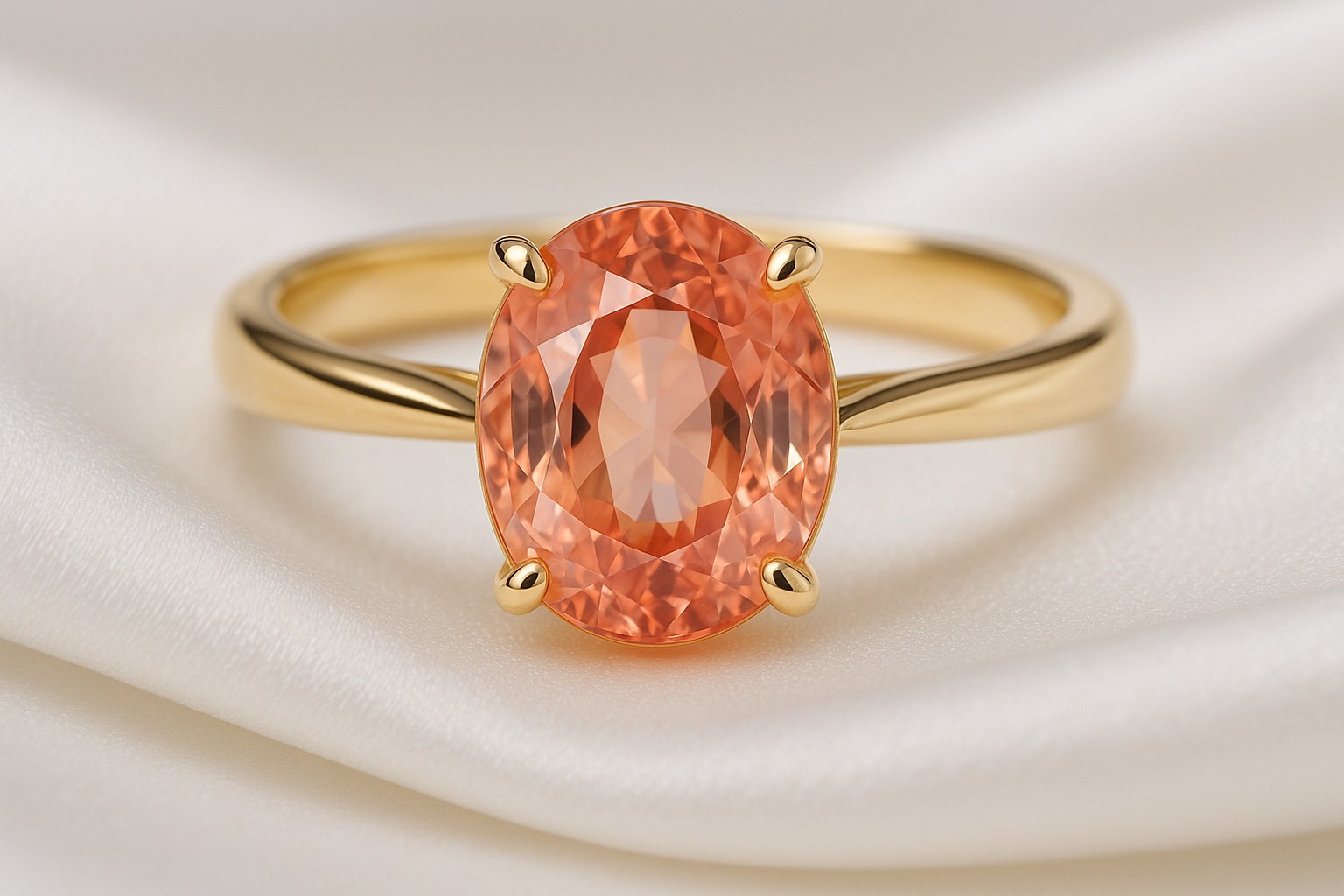
Padparadscha is the rarest sapphire variety and among the most coveted colored gemstones available. The name derives from Sanskrit for lotus flower, and the color it describes is equally specific: a delicate blend of pink and orange, similar to a lotus blossom or a tropical sunset. The qualifying color range is deliberately narrow; a stone that reads as simply pink or simply orange does not qualify for the designation.
The color results from a combination of chromium, which contributes the pink component, and iron, which contributes the orange. Sri Lanka is the defining source, with smaller quantities from Madagascar and Tanzania. Because so few stones fall within the precise color range that grading laboratories accept, certified padparadscha sapphires are genuinely scarce. Fine padparadscha of 1-2 carats sells for $3,000 to $10,000 per carat; exceptional specimens above 3 carats command considerably higher prices. A certificate from GIA or AGL confirming the padparadscha designation substantially increases both market value and resale liquidity.
Green, Purple, and Other Fancy Sapphire Colors
The remaining sapphire colors are collectively called fancy sapphires in the gemstone trade:
- Green sapphires are colored primarily by iron, often with a subtle yellow or teal tinge. They are less common in traditional markets but increasingly popular among buyers drawn to unusual, nature-influenced stones. Australia and Montana are the principal sources.
- Purple sapphires combine blue and red coloring agents and range from lilac to deep grape. Ceylon is the primary source for fine purple material.
- Orange sapphires are distinct from padparadscha in that orange clearly dominates without the required pink balance. They are relatively rare and appeal to buyers seeking warm-toned stones outside the yellow range.
- Color-change sapphires shift from blue or blue-violet in daylight to purple-red or brownish-red under incandescent light. A strong, clean color change is rare and commands a premium. Tanzania and Sri Lanka are the principal sources.
- White (colorless) sapphires contain no color-producing trace elements. They are occasionally marketed as diamond alternatives, though they lack diamond's characteristic dispersion and brilliance.
Sapphire Color Comparison at a Glance
| Color |
Main Cause |
Key Origin |
Rarity |
Fine Quality (per carat) |
| Blue |
Iron + titanium |
Ceylon, Kashmir, Burma |
Common to very rare |
$500–$50,000+ |
| Pink |
Chromium (low) |
Sri Lanka, Madagascar |
Moderate |
$700–$8,000 |
| Yellow / Golden |
Iron |
Sri Lanka |
Common |
$200–$4,000 |
| Padparadscha |
Chromium + iron |
Sri Lanka |
Very rare |
$3,000–$10,000+ |
| Green |
Iron |
Australia, Montana |
Common |
$100–$1,500 |
| Purple |
Mixed |
Sri Lanka |
Moderate |
$300–$3,000 |
| Color-Change |
Mixed |
Tanzania, Sri Lanka |
Rare |
$500–$5,000 |
Which Sapphire Color Is Best for Jewelry?
The right sapphire color depends on the metal, the setting style, and the wearer's palette:
- Blue sapphires pair well with platinum and white gold, and work equally well in yellow gold where the contrast sharpens the blue.
- Pink sapphires complement rose gold and yellow gold naturally; they also read well in white metal settings for a fresh, feminine look.
- Yellow and golden sapphires are best in yellow gold, which amplifies the stone's warmth.
- Padparadscha works beautifully in yellow gold and rose gold, where warm metal echoes the stone's own color story.
- Green sapphires suit yellow and rose gold settings, where earthy undertones read most naturally.
For engagement rings, blue, pink, and padparadscha are the most common choices. Blue sapphires offer the widest price range and the strongest traditional associations. Pink and padparadscha are more distinctive and suit buyers who want a stone that stands clearly apart from convention. For more on how hue and saturation affect value across all gemstones, see gemstone color.
Treatment, Certification, and What to Look For
Heat treatment is standard practice for sapphires of every color. It improves color and clarity by dissolving rutile inclusions and intensifying hue, and it is accepted by GIA, AGL, GRS, and the American Gem Trade Association. An unheated sapphire of fine color commands a meaningful premium over a heated stone of identical appearance because unheated status is rare and confirmed only by laboratory testing. Sri Lanka and Thailand are the primary sources in the commercial sapphire market: Sri Lanka supplies the finest natural material across multiple colors, while Thailand has long been the world's leading center for sapphire trading and heat treatment.
For blue sapphires above 2 carats, a certificate from GIA, AGL, or GRS that includes origin determination and heat treatment status is recommended, although buying from a reliable supplier is even more important. For padparadscha, the certificate is essential: the classification itself requires expert confirmation, and a stone without lab documentation will not be valued accordingly. For pink, yellow, and other fancy colors, a certificate is most critical when the price exceeds $2,000 per carat. Read more about which gemstone enhancements are accepted practice before making your decision.
Understanding sapphire facts including hardness, origin, and care also helps you evaluate individual stones with confidence. All sapphires score 9 on the Mohs scale, making them second only to diamond in hardness and fully suitable for rings worn every day.
Frequently Asked Questions
What is the rarest sapphire color?
Padparadscha is the rarest sapphire color. It describes a very specific blend of pink and orange, similar to a lotus flower or a tropical sunset. Because the qualifying color range is narrow and very few natural stones fall within it, certified padparadscha sapphires are genuinely scarce. Fine specimens of 1-2 carats sell for $3,000 to $10,000 per carat, with larger stones commanding substantially more.
What is the most expensive sapphire color?
At the top of the market, fine unheated blue sapphires from Kashmir set the highest prices per carat, regularly exceeding $50,000 per carat at auction for exceptional stones. Padparadscha ranks second in terms of per-carat premiums for fine certified material. Pink sapphires follow, with the finest unheated stones reaching $8,000 per carat or more.
Is a blue sapphire more valuable than a yellow sapphire?
Generally yes, at comparable quality levels. Fine blue sapphires from premier origins such as Kashmir, Burma, or Ceylon command considerably higher prices per carat than yellow sapphires of equivalent size and treatment status. Yellow sapphires with vivid color and high clarity are beautiful and valuable in their own right, but the global market consistently places a higher premium on blue at the fine-quality level.
What color sapphire is best for an engagement ring?
Blue, pink, and padparadscha are the most popular sapphire engagement ring choices. Blue offers the most traditional look with the widest price range, from commercial $300-per-carat stones to fine unheated gems above $15,000 per carat. Pink is warmer and more unusual at a lower price point. Padparadscha is the most distinctive option for a buyer who wants a truly rare stone. All sapphires score 9 on the Mohs scale, making any color equally suitable for daily wear.
Do all sapphire colors occur naturally, or are they treated to produce different hues?
All sapphire colors are naturally occurring. Blue, pink, yellow, green, purple, orange, and padparadscha all result from different trace elements within the corundum crystal. However, most sapphires on the market have been heat treated to improve or stabilize their color. Heat treatment is an accepted industry standard and does not make a color artificial. Untreated natural sapphires of fine color carry a premium because they are significantly rarer.
What is a color-change sapphire?
A color-change sapphire shifts color depending on the light source. Under daylight or fluorescent light, the stone typically appears blue or blue-violet. Under incandescent light, the same stone appears purple-red or brownish-red. A strong, clean color change with vivid tones in both lighting conditions is rare and commands a significant premium over single-color sapphires of comparable size. The main sources are Tanzania and Sri Lanka.
|
|
|
|
|
|




 Mobile Site