The "two months' salary" rule for engagement rings is a product of a 1980s De Beers advertising campaign, not a financial guideline. In reality, the average US couple spent approximately $5,500 on an engagement ring in 2024, according to The Knot's Real Weddings Study. Spending more or less than that benchmark reflects your financial situation and priorities, not your commitment.
How much you should spend comes down to three things: what you can afford without taking on high-interest debt, what style your partner prefers, and how to extract the most value from your budget. This guide covers all three.
What the Averages Actually Tell You
Buying directly from a diamond manufacturer rather than a retail jeweler with multiple layers of markup can deliver a significantly better ring at any price point. The Knot's $5,500 average includes diamonds bought at full retail. The same quality is available for considerably less when purchased at closer to wholesale prices.
National averages provide useful context, not targets. Couples in major cities such as New York or Los Angeles typically spend more because local store overhead is higher and the cost of living inflates retail prices. Regional averages in the Midwest and South are often 30-40% below the national figure.
How to Set a Budget You Can Afford
Start with a ceiling: the maximum you can spend from savings or a zero-interest payment plan, without creating financial stress. Then work backwards to find the best diamond that ceiling can buy. Common budget ranges and what they typically deliver:
- $1,000-$2,500: A 0.50-0.75 ct round brilliant in a solitaire setting with G-H color and VS2-SI1 clarity. At this budget, a lab-grown diamond can reach 1.00 ct or more with premium grades.
- $2,500-$5,000: A 0.75-1.25 ct natural round diamond with excellent cut, G-H color, and SI1 clarity. A lab-grown stone at 1.50-2.00 ct with equivalent quality grades.
- $5,000-$10,000: A 1.00-1.75 ct natural diamond in a more elaborate setting, or a 2.00+ ct lab-grown diamond with excellent grades throughout.
- $10,000+: 2.00 ct+ natural diamonds with premium color and clarity, or fully custom settings with bespoke design work.
Always reserve 10-20% of your total budget for the setting, which is separate from the diamond cost.
The Diamond Size vs. Quality Tradeoff
For any fixed budget, you are always choosing between carat weight and quality grades. There is no universal right answer, but there are smart defaults based on the 4Cs of diamonds.
Cut quality is the highest priority. A diamond's cut determines how much light it reflects and therefore how brilliant it looks. A poorly cut 1.50 ct stone looks noticeably duller than a well-cut 1.00 ct diamond. Always aim for Excellent or Ideal cut grade.
Color can be stretched slightly. Grades G and H are "near colorless" and are indistinguishable from D-F to the naked eye in most settings, at a price reduction of 15-25%. The right color grade also depends on your choice of metal: in a yellow gold setting, the warm tone of the metal masks any slight warmth in the diamond, so you can comfortably go as low as I or J; in white gold or platinum, the neutral metal makes color more visible, so G or H is the safer floor. Learn more in our diamond color guide.
Clarity is often stretched safely. VS2 and SI1 grades are eye-clean in most shapes. You need flawless or internally flawless clarity only in large stones (2.00 ct+) or in step-cut shapes like emerald or Asscher, where inclusions are more visible. See our diamond clarity guide for details.
How Diamond Shape Affects Your Budget
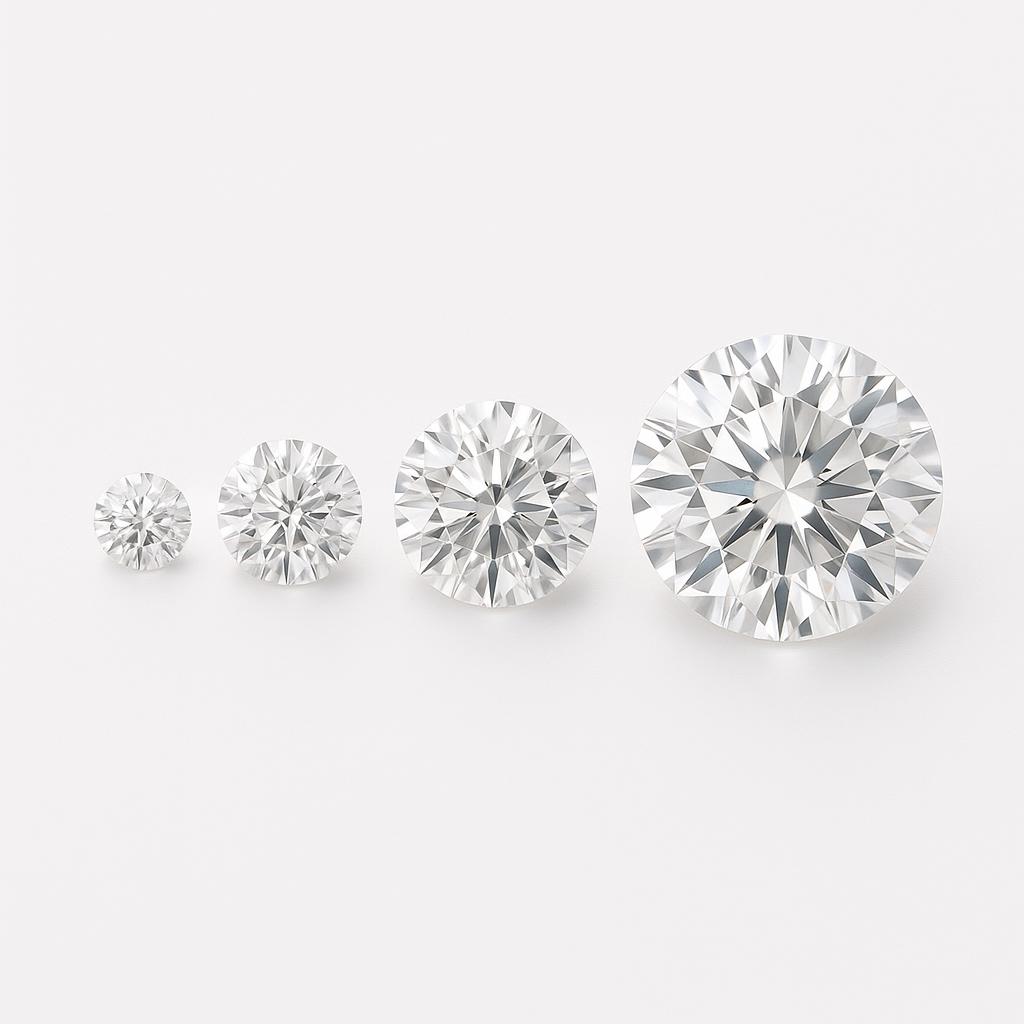
Round brilliant diamonds cost the most per carat of any shape because demand is highest and cutting a round stone requires removing more rough material. For the same quality grades and carat weight, fancy shapes typically cost 20-40% less:
- Oval and pear: Strong visual size per carat due to elongated shape. Often 25-35% less than a comparable round stone.
- Cushion and radiant: Warm, chunky brilliance. Typically 20-30% less than round.
- Emerald and Asscher: Step-cut faceting creates a hall-of-mirrors effect rather than sparkle. Tend to be 25-35% less than round, but inclusions are more visible, so higher clarity is needed.
- Princess: Square shape with high brilliance. Priced around 20-25% below round.
Where Lab-Grown Diamonds Change the Calculation
Lab-grown diamonds are chemically, physically, and optically identical to mined diamonds. In 2026, a lab-grown stone costs 70-85% less per carat than a comparable natural diamond with the same grades.
A buyer with a $3,000 budget who would have purchased a 0.70 ct natural round brilliant can instead buy a 2.00+ ct lab-grown diamond with excellent cut, G color, and VS1 clarity. The primary practical difference is that natural diamonds have historically held secondary market value better, while lab-grown prices have declined significantly in recent years.
For couples who prioritize visual impact and in-hand beauty over investment potential, lab-grown diamonds are a compelling option at any budget level.
Setting Cost and Metal Choice
The ring setting adds to your total cost and should be factored into your budget before you choose the center stone. Approximate ranges for standard settings:
- 14k gold solitaire: $400-$800 for a simple four or six-prong setting.
- Platinum solitaire: $800-$1,500+. Denser and more durable, but primarily a premium for buyers who want the specific properties of platinum.
- Halo or multi-stone settings: $800-$2,000+ depending on the number and size of accent stones.
For most buyers, 14k white gold delivers the same appearance as platinum at a significant saving. The metal choice does not affect the diamond's appearance.
For a detailed walkthrough of the full buying process, see our guide to buying an engagement ring. When you are ready to browse, explore our engagement rings collection or design your own ring by choosing a loose diamond and a setting separately.
Frequently Asked Questions
Is the two months' salary rule a real guideline for engagement rings?
No. The two months' salary rule was created by De Beers as part of an advertising campaign in the 1980s. It has no basis in personal finance or relationship research. A more useful approach is to spend the maximum you can afford from savings or a zero-interest payment plan, without creating financial pressure during the first year of engagement.
What is the average cost of an engagement ring in 2026?
Based on The Knot's 2024 Real Weddings Study, the average US engagement ring cost approximately $5,500. This figure varies significantly by region: couples in New York and Los Angeles typically spend more, while Midwest and Southern averages are 30-40% lower. Buying directly from a diamond manufacturer rather than a retail jeweler can deliver the same quality ring for meaningfully less than the national average.
Is it better to prioritize diamond size or quality?
Prioritize cut quality first: a well-cut smaller diamond outperforms a poorly cut larger stone in brilliance and visual appeal. After cut, G or H color and VS2 or SI1 clarity are indistinguishable from premium grades to the naked eye in most diamond shapes, freeing budget for more carat weight. The right balance depends on the specific stone, shape, and your partner's preferences.
Are lab-grown diamonds worth buying for an engagement ring budget?
Lab-grown diamonds are physically, chemically, and optically identical to natural diamonds. In 2026, they cost 70-85% less per carat than comparable natural stones. A $3,000 budget that would buy a 0.70 ct natural diamond can instead buy a 2.00+ ct lab-grown stone with the same quality grades. The main tradeoff is that natural diamonds have retained resale value better historically, while lab-grown diamond prices have declined in recent years.
What diamond shape gives the best value for an engagement ring budget?
Oval and pear-shaped diamonds typically offer the best visual size per dollar: they cost 25-35% less than a round brilliant of the same carat weight and quality, and their elongated shape makes them appear larger on the finger. Cushion and radiant cuts are 20-30% less than round. Round brilliant diamonds cost the most per carat of any shape, primarily due to higher demand and cutting waste.
How much should I budget for the ring setting separately from the diamond?
A standard solitaire setting in 14k white or yellow gold costs $300-$600. Platinum solitaire settings run $600-$1,000 due to higher material cost. Halo and multi-stone settings range from $800 to $2,000+. A simple rule: allocate 10-20% of your total engagement ring budget to the setting before deciding how much to spend on the center diamond.
|





 Mobile Site